
When I'm looking for a new place to spend a Saturday afternoon, I don't grab something off a shelf. I go find it.
I want to experience the location. I want to walk into the tasting room and talk to whoever's pouring. I want to know where the grapes came from and whether the people making the wine actually care about it. The difference between a bottle from the grocery store and a bottle I drove 45 minutes for isn't just the product. It's the whole thing: the place, the people, the story I can tell when I open it at dinner.
I know I'm not alone in that. The craft beer and small-batch wine markets have grown because a lot of people feel the same way. They want to know where their food and drink comes from. They want to support something real. But they have to discover it first, and that discovery happens increasingly online.
That's the problem. And it's the problem video solves better than almost anything else.

Your Customers Decide Before They Arrive
Here is a behavior worth paying attention to: most people who visit a craft brewery, winery, or specialty food producer have already decided it was worth the trip before they left home. They looked you up. They found your Instagram. They watched a video, or didn't.
If what they found was a homepage with a stock photo and no video, or an Instagram feed with three posts from 2022, some of them still made the drive. Most of them didn't.
Video accelerates the decision. It gives someone a real sense of what the place feels like, what you're about, and why it's worth their time before they've committed to anything. A two-minute brand film on your homepage works harder than any amount of copy.
The Wholesale and Distributor Conversation
If you're trying to get your product into restaurants, bottle shops, or retail distribution, video gives you an edge that's harder to quantify but very real.
A buyer meeting is competitive. Everyone walking in has a product they think is worth the shelf space. The ones who come in with a two-minute video that introduces their story before the conversation even starts are having a different meeting than the ones who don't.
Agronomy Farm Vineyard makes under 200 cases a year. Cold-hardy hybrid varietals, grown on a hillside in Oakham that gets beautiful sunrises and sits on a piece of property that Corey and Marissa have been farming since 2013. The wine is genuinely good. But their story is even better.
Their brand video communicates that story in a way that Corey and Marissa don't have to manually recreate in every discussion.
Events, Wine Clubs, and Getting People to Make the Drive
For producers with tasting rooms and event programming, there's a specific marketing challenge that's different from product sales: you have to get people to leave their house.
A weekend event at your vineyard is competing with every other option your potential attendees have that day. You're asking them to plan around it, make the drive, and spend real money before they know if it'll be worth it.
Video is how you pre-sell the experience. What does it feel like to be at your place on a Saturday in October? Who else is there? What's the energy? What does the property look like?
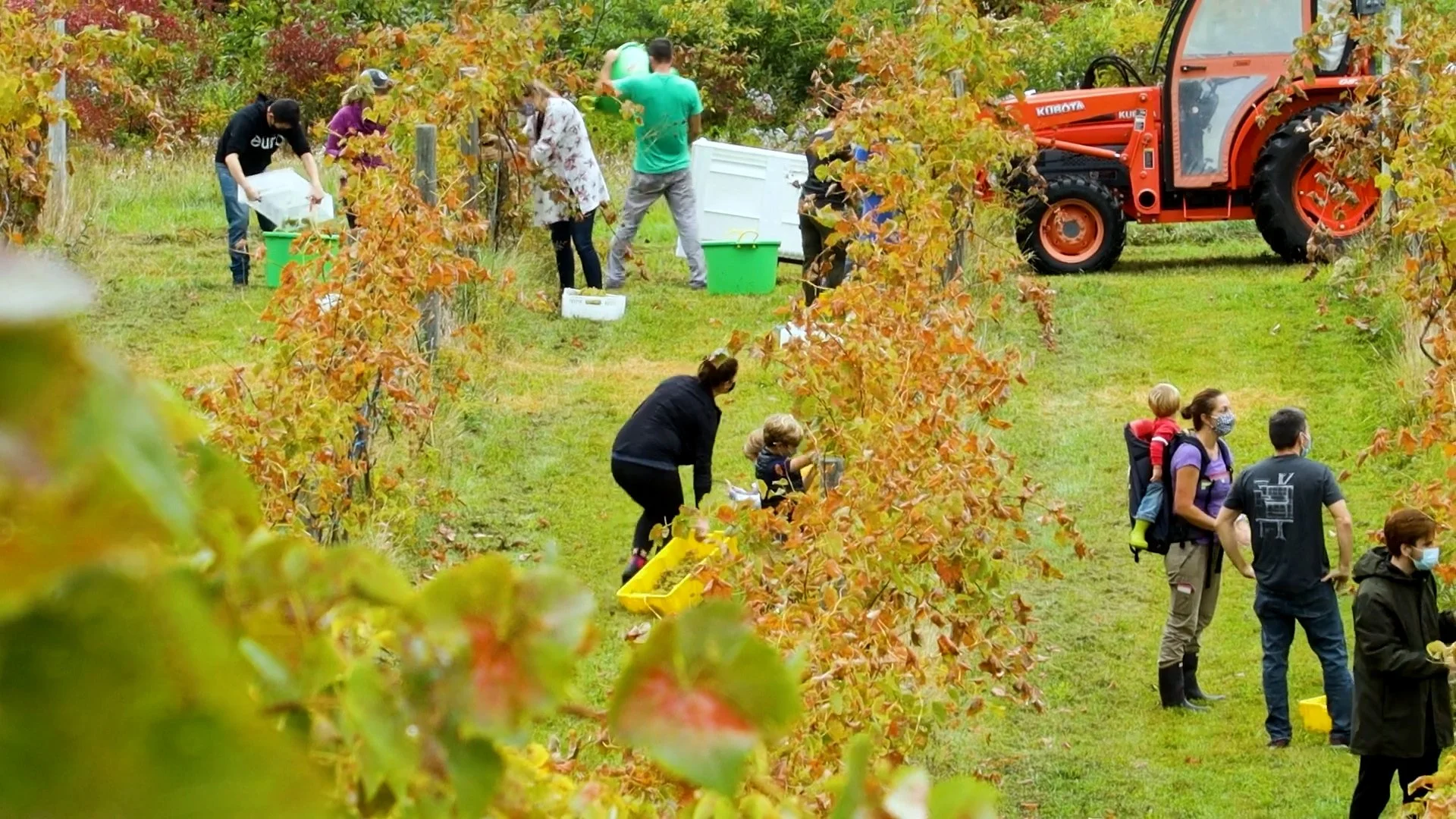
Agronomy holds a community harvest day every fall: they open the property, set up a breakfast spread, and invite neighbors to help bring in the grapes. When that event was mentioned in the brand video, a viewer commented that they'd love to come help with the harvest. They'd never visited before. They'd just watched the video.
That's the specific value of footage that captures atmosphere. It makes someone feel like they're missing out on something real. Which, in this case, they are.

The Crowdfunding and Capital Case
Specialty food and beverage producers often need to raise money at some point for equipment, facility upgrades, or expansion. And asking people to invest in something they can't touch is a harder ask than it looks.
Stillman Quality Meats in Hardwick launched a crowdfunding campaign in fall 2025 for a new USDA-inspected processing facility: a major expansion that would unlock wholesale distribution, custom processing for regional farms, and value-added product capacity at scale. Kate estimates it could support up to 300 small farms across the region.
The case for investing required explaining not just what the facility was but why it mattered: for Stillman, for farmers who currently drive hours to get an animal processed, for regional food infrastructure broadly. That's a complicated story to tell in an email.
Three videos gave the crowdfunding campaign tools designed for three different audiences: a core narrative for people just discovering the farm, an investor-focused cut making the case for the facility specifically, and a community impact version about what the expansion means for the broader food system. All three came from the same interview session and two production days.
The marketing firm running the campaign described the first cut as lovely. Subsequent versions turned around fast enough to hit the campaign's deployment windows without slipping the timeline.
The Numbers That Back This Up
Sweet Nala's Bakery in Oakham launched in June 2024 with zero social media presence: no brand, no following, about 30 friends-and-family followers. Through consistent video content and food photography, the bakery built 282 net new followers, 9,464 total content interactions, and 10,766 page visits in 20 months. 469 link clicks drove direct traffic to online sales. Sales grew approximately 10% year-over-year.
None of that came from paid advertising. It came from showing up consistently with content that looked intentional.
That's one data point. But it illustrates something broader: for local businesses selling to people who care about provenance, atmosphere, and craft, content that shows rather than tells compounds over time in a way that static posts and text copy don't.
What This Actually Takes
Most of the work described in this post was single-operator production. One camera, one person, on location, with a clear sense of the story before the shoot starts.
What it takes is knowing what to shoot, how to let a space look like itself rather than like a set, and how to cut it into something that holds attention. For breweries and wineries specifically, the bar is higher because the competition is investing in production. But you don't need to out-produce your competition. You need to out-story them.
The places worth visiting in Central Massachusetts have stories that larger producers can't replicate, because those stories are real and specific and rooted in a particular piece of land. That's the asset. Video is just how you share it.
Curious What This Could Look Like for Your Business?
Labradoodle Studio works with farms, food producers, breweries, and wineries across Central Massachusetts. If you want to talk through what a video presence could look like for your specific situation, reach out.
And if you haven't visited Agronomy Farm Vineyard in Oakham yet, do yourself a favor and stop in this summer. Tell Corey and Marissa I sent you.